
The Drone Revolution: How Aerial Technology is Changing Logistics and Transportation
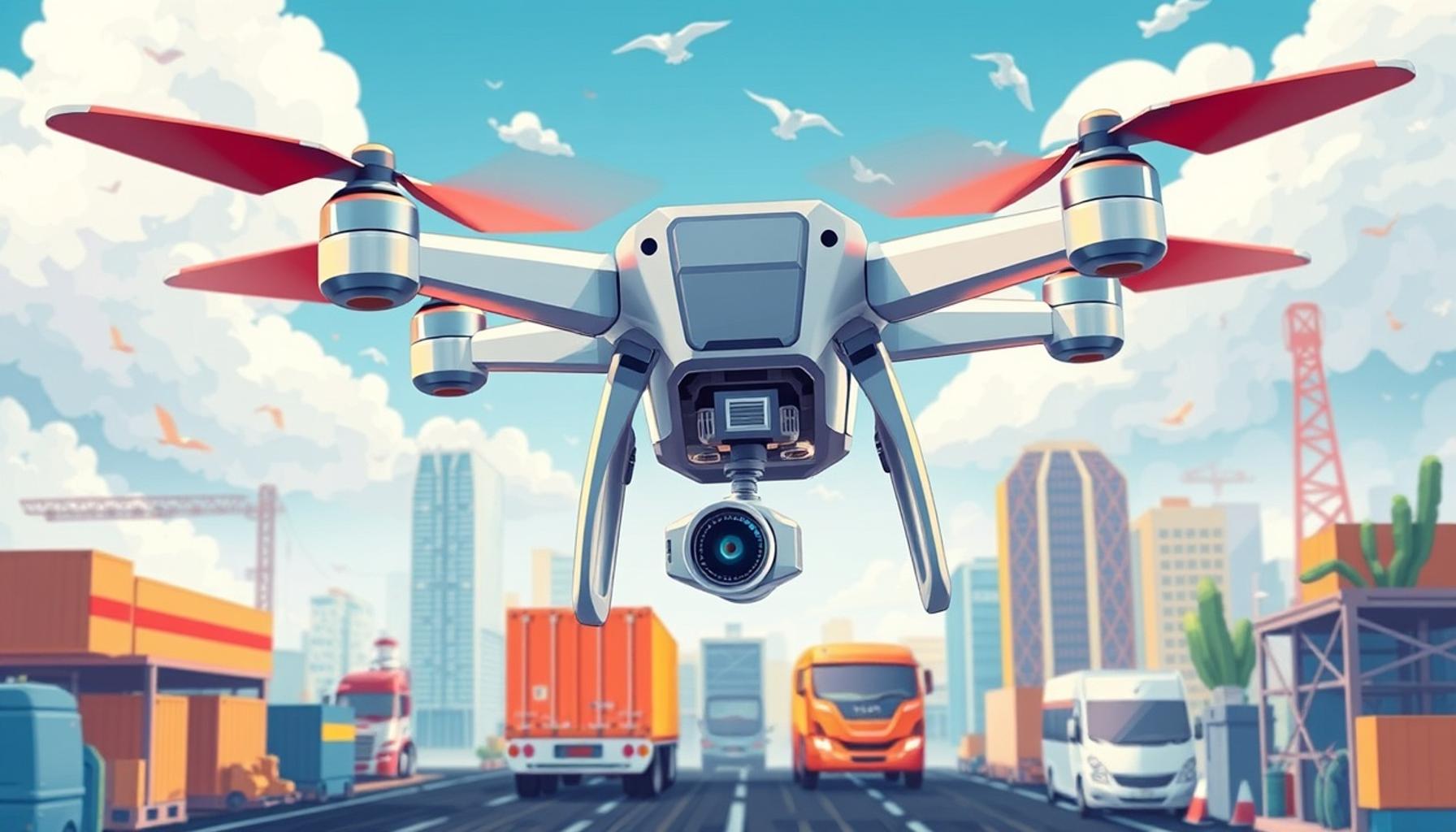
Understanding Drone Technology in Logistics
The rapid development of drone technology is heralding a revolutionary change in logistics and transportation. These aerial vehicles are not just a glimpse into the future; they are already redefining traditional business models and enhancing customer service. The transformation is evident in several tangible ways, which we’ll explore in greater detail.
Last-Mile Delivery
One of the most significant applications of drones is in last-mile delivery. Major companies like Amazon and UPS have initiated programs that utilize drones to deliver packages directly to customers’ doorsteps. For instance, Amazon Prime Air is a service that aims to deliver packages in 30 minutes or less using drones. This innovation is invaluable in urban settings where traffic congestion can delay deliveries. By employing drones, businesses can swiftly meet consumer demand, enhancing customer satisfaction while simultaneously cutting operational delays.
Aerial Surveillance for Inventory Management
Drones also play a critical role in aerial surveillance. They can be deployed along supply routes to monitor inventory levels and ensure timely deliveries. For example, companies in the agricultural sector utilize drones to assess crop health and optimize field management. By using drones equipped with advanced cameras and sensors, businesses can gather real-time data that helps streamline their operations and reduce the occurrence of bottlenecks. This capability not only boosts productivity but allows for a much more dynamic response to market needs.
Cost Efficiency and Traffic Avoidance
In addition to improving delivery speed, drones substantially enhance cost efficiency within the logistics sector. Traditional delivery methods often encounter various costs including fuel, vehicle maintenance, and labor expenses. Drones, on the other hand, typically entail lower operational costs since they can navigate traffic easily and avoid the congestion that typically hampers ground vehicles. For example, a company could save thousands of dollars annually by adopting drone technology for short-distance deliveries, resulting in a more sustainable operational model.
Enhancing Safety and Accessibility
Beyond efficiency and cost savings, drones significantly improve safety and accessibility. In times of disaster, such as hurricanes or wildfires, traditional delivery routes may become impassable. Drones can reach remote locations quickly without putting human lives at risk, delivering essential supplies like food, water, or medical kits. This capability is not just beneficial for emergency situations; it also provides services to areas that are typically underserved or hard to access, ensuring equitable distribution of goods.
As the technology converges with various industries, understanding the implications of drone usage becomes imperative. The rise of drones not only marks a new beginning for logistics and transportation but also signifies a shift toward a more efficient, safe, and inclusive system that benefits businesses and consumers alike. The future of delivery is not just about speed; it’s about creating a more interconnected world.
DISCOVER MORE: Click here for insights on promotion opportunities
Transforming Supply Chain Operations
The integration of drone technology into logistics is not just a trend; it’s a profound transformation that is reshaping supply chain operations. Companies across various sectors are leveraging drones to enhance efficiency, reduce costs, and streamline their processes. In this section, we will delve into how drones are revolutionizing logistics, particularly through improved data collection, dynamic route optimization, and enhanced security measures.
Enhanced Data Collection
Drones equipped with modern sensors and cameras provide businesses with the ability to gather comprehensive data analytics that were previously difficult or costly to obtain. For instance, logistics companies can utilize drones for real-time monitoring of shipments. This capability allows them to track the condition and location of goods in transit, reducing the likelihood of loss or damage. Drones can provide valuable insights such as:
- Monitoring temperature-sensitive deliveries in the pharmaceutical sector.
- Assessing stock levels in warehouses without the need for manual inventory checks.
- Evaluating the condition of assets, thus improving maintenance schedules.
This enhanced data collection not only aids in optimizing delivery routes but also ensures higher accuracy in forecasting demand and managing resources. As a result, businesses can make informed decisions that improve overall operational efficiency.
Dynamic Route Optimization
Another significant advantage of drone technology is its capability for dynamic route optimization. Unlike traditional vehicles that are often hindered by traffic jams or construction, drones can take the most efficient paths, reducing delivery times significantly. For example, a drone can fly directly to its destination rather than navigating through city streets, which benefits businesses in several ways:
- Quicker delivery times enhance customer satisfaction.
- Reduced fuel consumption contributes to lower operational costs.
- Less reliance on ground transportation can alleviate environmental impacts.
This ability to adapt to changing conditions in real-time is a game-changer for logistics companies aiming to stay ahead in a competitive market.
Improving Security Measures
Drones also play a vital role in enhancing security measures within logistics operations. The use of drones for aerial surveillance helps companies monitor their facilities and transportation routes more effectively. For example, companies can utilize drones equipped with surveillance cameras to oversee warehouses, ensuring that safety protocols are adhered to and that theft is minimized. This real-time monitoring can deter potential security breaches, giving businesses greater peace of mind.
As businesses continue to explore the benefits of drone technology, it is evident that adopting these innovations can significantly improve logistics operations. Whether it is through enhanced data analytics, dynamic route optimization, or improved security measures, drones are quickly becoming an integral part of an efficient and modern supply chain system.
DISCOVER MORE: Click here for insights on credit card rewards
Expanding Delivery Capabilities
Besides enhancing supply chain operations, drone technology is also expanding the delivery capabilities of logistics companies, enabling them to reach previously inaccessible areas with greater efficiency. This aspect of the drone revolution not only ensures that goods reach their destinations more quickly but also opens up new markets for businesses. In this segment, we’ll explore the implications of rural delivery, emergency response logistics, and the integration with traditional distribution methods.
Rural Delivery Solutions
One of the most significant challenges facing logistics providers has been delivering to remote or rural locations. Traditional ground transport can be inefficient, taking longer than necessary to navigate winding roads or sparse populations. Drones offer a cost-effective solution for these challenges. For instance, a company like Zipline has successfully implemented drone delivery systems in rural areas of Rwanda, where they transport medical supplies to clinics that are hard to reach by road. This not only saves time but also improves healthcare delivery in areas where every minute counts.
In the United States, firms are beginning to explore similar opportunities. The Federal Aviation Administration (FAA) has been working on regulations that would allow for expanded drone operations in rural regions, further promoting the benefits of aerial delivery for populations that might otherwise remain underserved.
Emergency Response Logistics
Drones have proven to be essential tools in emergency response logistics, particularly in situations where traditional transportation systems are compromised. During natural disasters like hurricanes, floods, or wildfires, ground routes may become impassable, hampering the delivery of critical supplies.
Through the rapid deployment of drones, organizations can deliver essentials such as food, water, and medical supplies directly to affected areas. An example can be seen in the aftermath of Hurricane Harvey, where drones were used to assess damage and deliver aid quickly. In scenarios where seconds matter, the capability of drones to bypass obstacles can mean the difference between life and death.
Integrating Drones with Traditional Distribution
While drones are making significant strides in logistics, their effectiveness can be enhanced when integrated with traditional delivery systems. Instead of completely replacing ground vehicles, companies are finding that a hybrid approach can improve overall service. For instance, companies like Amazon are exploring the use of drones for the final leg of deliveries. A delivery truck may transport packages to the neighborhood, and drones can then take over for the final short-distance delivery, reducing delivery times and costs.
This system not only speeds up the delivery process but also maximizes the efficiency of existing transportation networks. By utilizing drones to handle short trips, businesses can free up resources and personnel for longer routes, thus optimizing their entire supply chain strategy. Moreover, this model allows for scalability, as companies can adjust their use of drones based on demand fluctuations without overhauling their logistics entirely.
As drone technology continues to mature, the expansion of delivery capabilities holds promise for redefining logistics and transportation norms. Whether addressing the unique needs of rural communities, responding swiftly to emergencies, or creating hybrids of drone and ground delivery methods, the potential for innovation knows no bounds.
DISCOVER MORE: Click here for essential insights
Conclusion
The emergence of drone technology in logistics and transportation is not merely a trend; it represents a revolution that has the potential to transform how goods reach consumers. By addressing critical challenges like rural delivery and emergency logistics, drones are proving their worth in the most demanding situations. The efficiency and speed that drones offer create opportunities for businesses to expand into new markets and enhance their service offerings without overhauling entire systems.
As we consider the implications of integrating drone technology with traditional distribution methods, it becomes clear that a hybrid approach could be the optimal path forward. Combining the strengths of both aerial and ground logistics can lead to more agile and responsive supply chains, ultimately benefiting consumers and businesses alike. With ongoing advancements in technology and regulatory frameworks from entities like the Federal Aviation Administration (FAA), the integration of drones into everyday logistics will continue to evolve.
In summary, the drone revolution is not just about delivering packages faster; it is about creating a more efficient, flexible, and responsive logistics ecosystem that meets the needs of our changing world. As these innovations continue to unfold, we can anticipate a future where aerial deliveries are commonplace, drastically improving accessibility to goods and services for all. The drone revolution is here, and its full impact on logistics and transportation is just beginning to take flight.

Linda Carter
Linda Carter is a writer and expert known for producing clear, engaging, and easy-to-understand content. With solid experience guiding people in achieving their goals, she shares valuable insights and practical guidance. Her mission is to support readers in making informed choices and achieving significant progress.