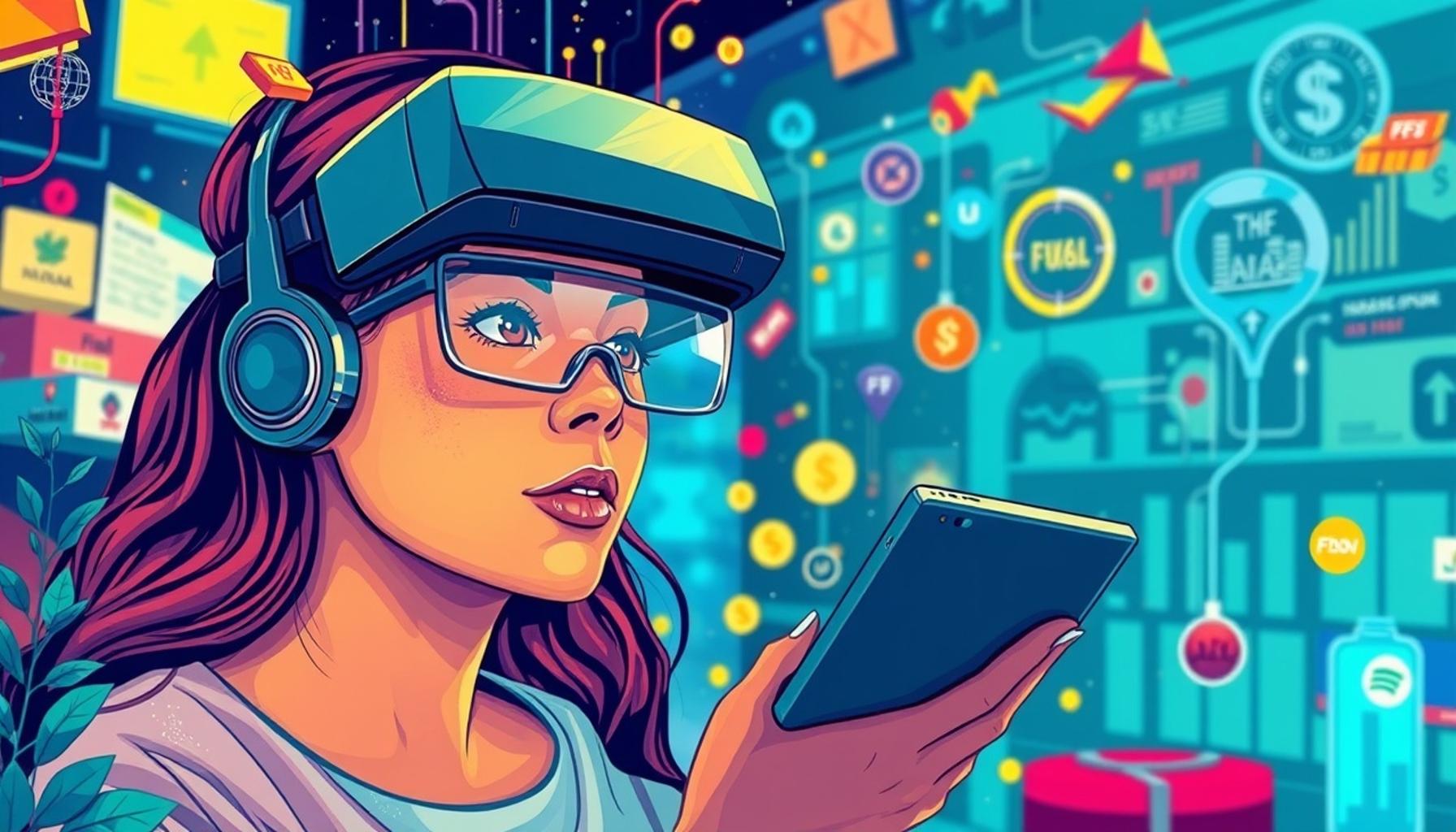
The Evolution of Augmented Reality in the Education Sector

Understanding the Impact of Augmented Reality in Education
Across the education landscape, Augmented Reality (AR) is reshaping how students learn and interact with the world around them. By integrating digital content with the real environment, AR provides learners with an immersive experience that makes complex subjects more relatable and easier to grasp. It enables educators to create a dynamic classroom atmosphere where theoretical concepts are reinforced with tangible visuals.
Interactive Learning
One of the standout features of AR is its capacity for interactive learning. For instance, in a traditional biology class, students might struggle to visualize the intricate structures of a cell. With AR applications, students can manipulate 3D models of cells, examining organelles in detail from various angles. This hands-on approach not only fosters engagement but also helps solidify understanding. Tools like Merge Cube encourage students to explore subjects such as anatomy or geography, allowing them to “hold” models in the palm of their hands and explore them interactively.
Enhanced Visualization
Furthermore, enhanced visualization plays a vital role in education. Subjects that often challenge students, such as astronomy, become accessible when augmented with visual aids. For example, AR can superimpose star maps and constellations onto the night sky, allowing students to point their devices at the sky and see the celestial bodies in real-time alongside their names and information. Such visual context transforms abstract concepts into concrete, understandable forms that resonate with learners.
Accessible Education
In addition, accessible education ensures that learning caters to all types of learners, whether they are visual, auditory, or kinesthetic. This inclusivity is particularly beneficial in diverse classrooms, where students may have varying degrees of comfort with traditional learning methods. For example, AR Flashcards engage students not only through reading but also by providing audio cues and tactile interaction, allowing them to explore subjects in a multi-sensory manner. This adaptability can lead to improved focus and retention of information.
Real-World Applications
The practical applications of AR in education are expansive. With interactive apps like Google Expeditions, teachers can take students on virtual field trips across the globe, visiting historic landmarks or experiencing the surface of Mars without leaving the classroom. This exposure not only broadens students’ horizons but also ignites curiosity and fosters a love of learning. Similarly, programs like Quiver allow students to color their creations and watch them come to life in 3D through a mobile device, merging creativity with learning seamlessly.
As we explore the evolution of AR in education, we highlight its origins, key milestones, and future potential. By understanding these developments, educators can better leverage AR technologies, ensuring that students engage with their learning materials in meaningful and effective ways. This engagement not only drives academic success but prepares students for a future increasingly intertwined with technology.
DISCOVER MORE: Click here to enhance your budgeting skills
Tracing the Roots of Augmented Reality in Education
The journey of Augmented Reality (AR) in education began in the early 1990s, but its true potential has only recently come to light as technology has advanced. Initially, AR was an experimental concept, primarily utilized in research settings and interactive exhibits. However, as mobile technology evolved and became more ubiquitous, classrooms started to harness AR’s capabilities to enrich the educational experience.
Early Innovations
One of the first instances of AR in education was the use of head-mounted displays in university settings for complex simulations. These systems were often cumbersome and expensive, limiting their application to select institutions. The introduction of simpler tools began to emerge in the late 2000s, marking a pivotal moment for educators. For example, products like Wikitude and Layar allowed for early mobile AR experiences where students could scan QR codes or images in textbooks to unlock supplementary content, thus bridging the gap between printed material and digital information.
Transformative Technologies
The arrival of smartphones and tablets in the late 2000s brought AR into the limelight. With devices becoming more powerful and accessible, educational software developers began creating applications tailored for teachers and students. Noteworthy applications included:
- Blippar – An app that allowed students to interact with their environment using AR, turning ordinary learning materials into interactive experiences.
- Aurasma – This platform enabled educators to create AR overlays on physical items, essentially allowing any object to come alive through visual content.
- Quiver – An innovative tool that transformed coloring pages into animated AR experiences, combining creativity with technology in a fun and educational environment.
These platforms marked a significant shift, showing educators that the classroom could be transformed into a vibrant learning space. Not only could lessons be made more engaging, but students also began to take ownership of their learning as they interacted actively with digital content.
Collaborative Learning
As AR tools proliferated, they also encouraged collaborative learning, where students worked together to explore digital overlays on physical spaces. This approach fostered teamwork and communication skills, essential components for the 21st-century learner. For instance, as students used AR to conduct virtual experiments or collaborate on projects, they could share insights and problem-solve collectively, making learning a more social experience.
As we continue to examine how AR has evolved within the education sector, it is important to appreciate how these early innovations laid the groundwork for more sophisticated applications. Through interactive tools and collaborative approaches, educators are redefining traditional teaching methods, paving the way for a future where learning is more dynamic and engaging than ever before.
DON’T MISS OUT: Click here to discover essential tips
Advancements in Augmented Reality Applications
As technology continued to advance, so did the applications of Augmented Reality in education. The introduction of platforms such as Google AR & VR and Merge Cube paved the way for a more immersive and pragmatic learning experience. Unlike earlier AR tools, these innovations allowed students to explore complex subjects like biology, geology, and physics in three dimensions, enhancing their comprehension significantly.
Immersive Learning Experiences
One of the remarkable developments in AR has been the ability to create immersive learning experiences where students can visualize and manipulate virtual objects. For example, programs like Google Expeditions allow teachers to guide students through virtual field trips, from the depths of the ocean to outer space, all while remaining in the classroom. This not only enhances engagement but also enables students to learn from real-world applications. Imagine, for instance, a biology teacher using AR to take students on a virtual tour inside the human body, highlighting the functions of different organs as they navigate through a lifelike environment.
Personalized Education
Another significant advancement is the personalization of learning. AR technologies help accommodate diverse learning styles by allowing students to interact with the material in ways that best suit them. For instance, applications like AR Flashcards bring static flashcards to life, enabling younger students to engage more effectively with languages, animals, or math concepts. The visual and interactive aspects cater to visual and kinesthetic learners, making learning more accessible to a wider range of students.
Assessments and Feedback
Furthermore, AR is transforming assessments within the educational framework. Instead of relying solely on traditional exams, instructors can incorporate AR tools to evaluate understanding in real-time. For example, applications such as Seene allow teachers to assess student projects through virtual presentations where learners can showcase AR-infused work, captivating both their peers and educators. This not only makes assessment more enjoyable but also allows immediate feedback, thus fostering a more productive learning environment.
Expanding Access to Resources
With the rise of Augmented Reality, students are not just limited to physical textbooks or resources. Global initiatives like AR in Museums offer students access to historical artifacts, artworks, and cultural experiences beyond their geographic location. This paradigm shift expands their educational resources significantly, bringing access to knowledge right at their fingertips. For instance, students studying history can utilize AR apps to view historical landmarks in 3D, enhancing their contextual understanding of an era or event dramatically.
As educators and institutions continue to embrace these innovations, the landscape of education is evolving rapidly. With immersive experiences, personalized learning, engaging assessments, and expanded resources, the integration of AR into educational frameworks represents a monumental step toward enriching students’ academic journeys. The ongoing development of these tools not only cultivates more engaging classroom environments but also prepares students for a future where digital literacy is essential.
DISCOVER MORE: Click here to uncover new career paths
Conclusion
In summary, the evolution of Augmented Reality (AR) in the education sector has marked a transformative shift in how knowledge is imparted and absorbed. As we have explored, AR technology enhances student engagement through immersive learning experiences that make complex subjects more accessible and relatable. This level of interaction fosters greater enthusiasm in students, providing tangible insights into concepts that might otherwise seem abstract.
Moreover, the emphasis on personalized education allows for customized learning paths that cater to the unique needs of each student. By accommodating various learning styles, AR empowers educators to enhance comprehension and retention, ensuring that all students can thrive within their learning environments. The innovative assessment methods AR introduces further strengthen the feedback loop between educators and learners, making education a more dynamic and responsive process.
As AR technologies continue to advance, we anticipate even greater integration of these tools into the classroom setting, enabling students to explore resources and experiences previously out of reach. From virtual museum tours to interactive science experiments, the possibilities are virtually limitless. Ultimately, Augmented Reality isn’t just a trend; it represents a foundation for lifelong learning in an increasingly digital world. By embracing AR, educators can cultivate curiosity and equip students with the skills they need to excel in a technology-driven future. The journey of AR in education is only just beginning, and it holds promising potential for reshaping the academic landscape for generations to come.

Linda Carter
Linda Carter is a writer and expert known for producing clear, engaging, and easy-to-understand content. With solid experience guiding people in achieving their goals, she shares valuable insights and practical guidance. Her mission is to support readers in making informed choices and achieving significant progress.